Tuesday, October 30, 2012
The Great Bear Rainforest, British Columbia (10/12)
Visiting the Great Bear Rainforest in British Columbia, Canada was on my list of places to see and photograph in my lifetime. We were able to have several special bear photo opportunities.The above and below Grizzly Bear sow and cub were some of my favorites. In the below image, the sow and cub were in the alert status due to an approaching male.
We had several Black Bear opportunities as well. This bear jumped in and grabbed the spawned chum salmon seen pictured.
Most of the bears were not shy. This Grizzly feasted on a spawned salmon as we drifted by in our zodiac.
One of the main photo goals was to see and hopefully photograph a Spirit or Kermode Bear. The Spirit Bears only reside on an island off the coast of British Columbia. As you can see from the below images, they are cream color. They are a subspecies of the American Black Bear, not an albino, but a color morph, due to recessive gene. We were a tad apprehensive since we did not see this guy, until the last day and the last two hours of the trip. Although not a killer shot, just seeing one of these rare bears is special and now removed from my bucket list. He was browsing on a mountain side when and feeding on mussels when these photos was captured.
In addition to the bears we also had some great humpback whale opportunities. In the top below image you can see some bubble feeding. Humpbacks use their baleen (like a strainer in their mouths, rather than teeth) to capture krill or small fish. In the middle whale of the image, the baleen can be seen (beige/brown stringy looking stuff) to the right and left of the pink roof of mouth. What happened here, just before humpbacks emerging up out of the water, were herding whales under the school of fish, releasing bubbles to confuse and bunch the fish together. The whales next surge up with their mouths open. The lower jaw actually distends and the mouth collects a huge mouthful of water, then spits it out, straining the krill/fish through its baleen to remain and be eaten. If you look closely at this image, you can see some fish just to the right of the lower jaw jumping up above the water.
The water gushing out of the blowhole in the second image came out nicely with a clean background.
Lots more images over on the web site. Blue Skies.
Tuesday, September 18, 2012
Southwest Florida (9/12)
Made a quick trip down to visit family in the Naples area of Florida a couple of weeks ago. I was able to sneak out for two mornings and evenings to photograph. On one evening, I was very fortunate to meet up with fellow blogger and avian photographer extraordinaire, Bob Pelkey. Bob was kind, teaching me all about one of his favorite locations, Bunche Beach Preserve. We enjoyed walking out into the water, shooting back towards the shoreline, a comfortable distance from the birds. Locating and being able to photograph the above Reddish Egret was special. What was even more special was finding the Reddish Egret morph, in the flying image below.
In addition to the Reddish Egrets, being able to photograph the Roseate Spoonbills at close proximity and in good light was a bonus as well. If you look closely at the second image below, you can see a shrimp in between the bill.
Not one of my favorite species to photograph is the White Ibis. They are a common species in Florida. Posted these because I liked the unique flying positions.
Black Skimmers are always fun and challenging to photograph. As you can see, in the top image below, I was able to get very close as he came in skimming for a meal.
The below Blue Heron flew really close while I down low photographing a Godwit.
The family went over and had dinner on Sanibel Island one evening. We stopped at a few beach locations. I was able to capture these birds (Reddish & Snowy Egret) feeding on bait fish.
Two evening sunset silhouettes to finish off the post. The top is a of a Blue Heron with the Sanibel Bridge in the background and the second, a White Ibis.
More trip images, if interested, over on my web site. Blue Skies.
Saturday, August 25, 2012
Pantanal, Brazil (8/12)
Lead a group of photographers to the Pantanal, Brazil last week. We could not have had a better time. One of our goals, was to hopefully have an opportunity to photograph one of the most elusive cats in the world, the jaguar. We were fortunate to have daily sitings as well as photo opportunities. The top image was my favorite of the trip due to the eye contact, position and surrounding habitat. Seeing these animals are certainly a highlight in my life. The two images below were taken on the first day and last day of the trip.
The Giant Otters were another trip highlight. We had daily opportunities with them as well. They are so comfortable with human presence. Time and patience, in close proximity, without disturbance, provides for revealing and intimate situational photos.
Kingfishers are such a challenging species to photograph here in the US. The Kingfishers of the Pantanal are so tolerant. As long as you drift in slowly, they go about their business fishing. There are 5 different species and we were able to photograph 4. Below from top to bottom are a Amazon female, Ringed female and Amazon male.
Black-collared hawks are common in the area we traveled. We photographed several during our week. These images were captured on the Rio Clara River from a boat.
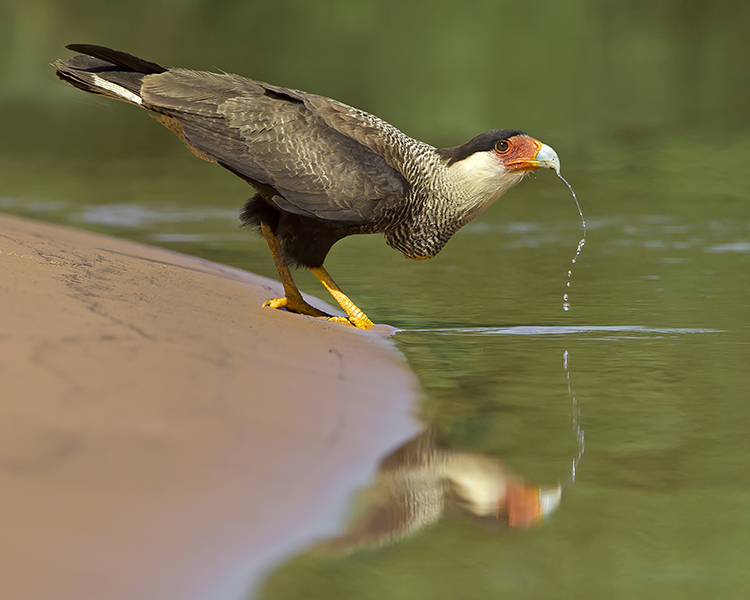
Some additional images that I was excited about capturing are from top to bottom the drinking Caracara, Campo Flicker and Tocu Toucan.
Lots more images over on the web site if interested. I'll be leading another small group again in August 2013. If you have an interest in joining us, click on this Pantanal Tour link or send along a email.
Blue Skies.
Friday, July 27, 2012
Lake Clark National Park, Alaska (7/12)
Lead a group of photographers to remote Lake Clark National Park, Alaska last week. Lake Clark is America's least visited park. Things could not have gone better with weather and bear photography. We had numerous sessions with bears, often at a very close proximity.The above bear image was one of my favorites from the trip. The bear's pose reminds me of one of those old time large nude women on a couch impressionists paintings.
The bears are primarily eating razor clams and grass this time of the year. In the above image you can see how expertly they can remove the clam with their claw from the shell. During the low tides, you can get some nice reflections from the clamming bears, as seen below.
The below bear enjoyed a sushi skate that we watch him retrieve from the water.
One morning the bear below came running right down the beach towards us and kept going.
We had several sessions with two, 3 year old cubs. The image below is of one of them standing up in some Lupine.
One day we also took a boat trip to one of the close islands. It was a rookery for both the puffins and kittiwakes. Below is an image of a flying horned puffin.
Lots more keepers over on the web site. Also, some interesting videos of the bears.
I am leading another group in 2013. The tour is already full. If you have any interest in joining us in 2014, send along an email. Blue skies and great histograms.
Saturday, July 7, 2012
Yellowstone National Park (6/12)
Spent last week in Yellowstone National Park, WY. Instead of exploring the park, concentrated on capturing an image of an otter catching a cutthroat trout. We hiked up to a lake before light every day and remained in hopes for an otter arrival. In six days we had 4 sessions with the otter fishing a feeder creek of the lake where the cutthroat were spawning. The sequence above is what I was hoping to photograph. While up at the lake, we also had some nice waterfowl opportunities. The top two photos are of a Barrow's Goldeneyes and the bottom image is a pair of Lesser Scaup.
I enjoy June in Yellowstone due to the number of recently born wildlife viewing opportunities. So, when we were not at the lake, we were fortunate to find some mothers with recently born young. In order, from top to bottom, you see an Antelope doe and dawn, Bison cow and calf and Elk cow and calf.
We also found the below coyote hunting and fox close to the road.
Certainly a fun trip. If you want to see additional images captured, take a look on my web site. Blue Skies.
Subscribe to:
Posts (Atom)